Posture Guide: Bringing the Spine in Line
Posture is a go-to topic for almost every practitioner in the country. Our nation is full of rounded backs and forward heads - good posture has become more irregular than regular. It is well known that poor posture can lead to several different conditions which can be harmful to the body’s connective tissue and musculature. At NRG we believe there are many different exercises to improve posture and make our body shape as natural as possible.
You often hear people say “keep your back straight” - technically, this is wrong. The spine is designed to be a slight curve, with each part of the spine having a different function. The lower back is curved in towards the body, so that the region can deal with heavy loads such as lifting and squatting. The middle of your spine, in line with your rib cage, is curved away from the body, which allows for more movement and makes moving your arms much easier.
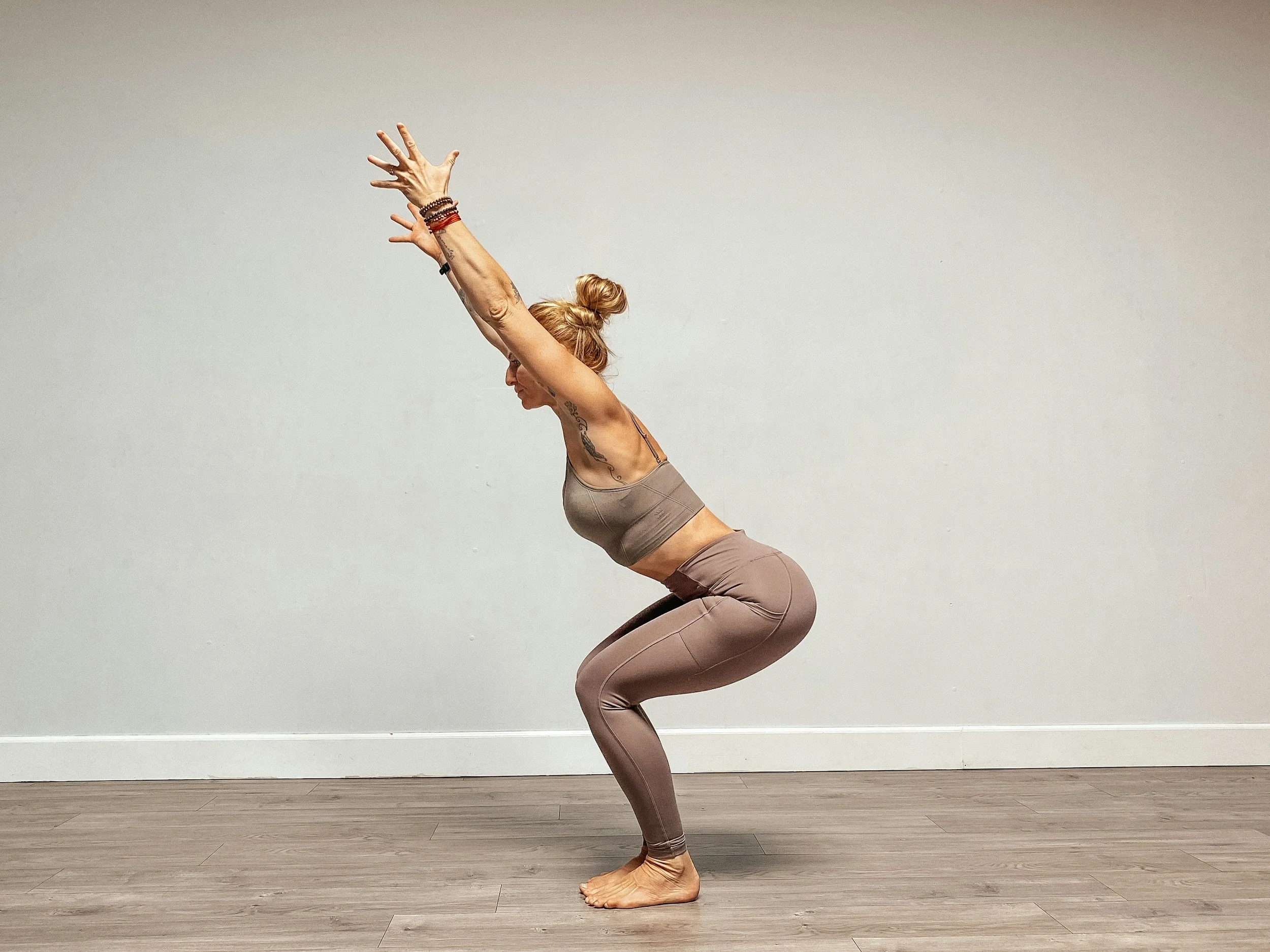
Here are two exercises that help correct excessive curvature at both the middle and the lower back.
Exercise 1: Scapula Retraction. With so many of us sat at computers and desks, we find ourselves rounding the upper body forward - almost as if getting as close to the screen as possible were better. This causes the shoulder blades (the scapulae) to move around the ribs and forward, putting the muscles in the back in a stretched position, which is not a strong position. This exercise targets bringing the shoulder blades back towards the spine by contracting the muscles in the back.
Start by sitting at the edge of your seat, sit up as “straight” as you can with your head in a neutral position - not forward. With your arms straight by your side, squeeze your shoulder blades back, hold for 3 seconds and relax for a second. Repeat 10 times, take a 90-second break, and complete 3 sets. If this is too easy, progress the movement with your arms out straight in front of you, bringing the shoulder blades back together.
A warning: do not squeeze too hard with the shoulders, as this can cause cramping - or, if your posture is particularly poor, pain travelling up the neck. If that happens, ease off the squeeze on each repetition.
Exercise 2: Hip Bridges. This one is mainly for lower back pain sufferers. Lie on your back with your knees bent and feet flat on the floor, keeping your knees and feet in line with your hips. Rather than the usual hip bridge where you repetitively drive your hips off the floor, this version is more controlled and much slower.
From the starting position, gently squeeze the abdomen - you should feel the curve in your lower back flatten. Unless your spine is particularly curved, you should be flat on the ground. While holding the abs and keeping the spine in this shape, drive through your heels and bridge up. You will not achieve as much height as a “normal” hip bridge, but it is much more beneficial for your spine. As with the last exercise, we prescribe 3 sets of 10 repetitions with a small hold on each bridge. If you need to stop at any stage to regain good spinal shape, that is fine.
We hope this opened your eyes to how good posture can help you. At NRG we offer sports therapy, personal training, sports massage and injury assessment, all within our sports injury clinic.
Struggling with posture problems? NRG Sports Therapy is a sports injury clinic in Bloomsbury, Central London. Book an injury assessment and we will build you a plan to get you moving pain-free.