London Marathon Race-Day Tips: How to Be at Your Best
Whether you are a seasoned veteran of running or taking on your first ever London Marathon, there is always a buzz around this particular run. Whether it is the immense support around the streets of Central London, the running conditions the professionals favour, or quite frankly the sublime-to-ridiculous fancy dress outfits, this marathon just feels different to the others. But how have you prepared? Here are five pieces of advice to prime and prep the body for the ultimate test of endurance.
Sleep
Sleep is the best form of recovery any athlete can have - the optimum opportunity for muscles to repair, soft tissue to relax, joint inflammation to reduce and mental fatigue to recede. But it is not just about going to bed every night; it is about sleep quality. Are you getting 7-9 hours of quality sleep a night (6 at the very minimum, and not for more than 3 days straight)? Is your sleep disturbed? We suggest: keep the room at around 18 degrees (the optimum sleeping temperature); make sure your bedding keeps your temperature consistent through the night; have a consistent sleep routine; keep screen use low for an hour before bed; keep the room dark and quiet; and consider magnesium if appropriate. Stick to these and your daily function will improve dramatically - and your performance with it.
Bathing
This sounds simple and is simple. All you need is a bath and hot/cold water; the hard bit is finding what works for you. After one run, have a 20-30 minute hot, relaxing bath - let the stiffness of the muscles release, note how you feel immediately after, and stay hydrated. The next morning, note how the body feels. After another run, try a shallow cold bath, just covering your legs and abdomen, for 10-20 minutes - it does not have to be ice, but it needs to be cold. Take something to distract you from the cold: a book, a phone call, something to watch. Note how you felt after, and again the next morning. Then simply compare the notes. Whichever left you feeling looser and more ready to run again - that is your recovery tool.
Do not be scared of change
Mix your training up in the run-up to the event, until about the two-week mark. Do something that tests your body in a different energy zone and fatigues you differently - the London Marathon can throw anything at you. Use incline hills, change your tempo training, move at a quicker pace than you are used to, allow yourself rest intervals, run different routes. And occasionally train away from running altogether: the gym, bikes, the rowing machine, bodyweight movements, box jumps - increase your power, raise your heart rate, test yourself with something new.
Balance, coordination and stability
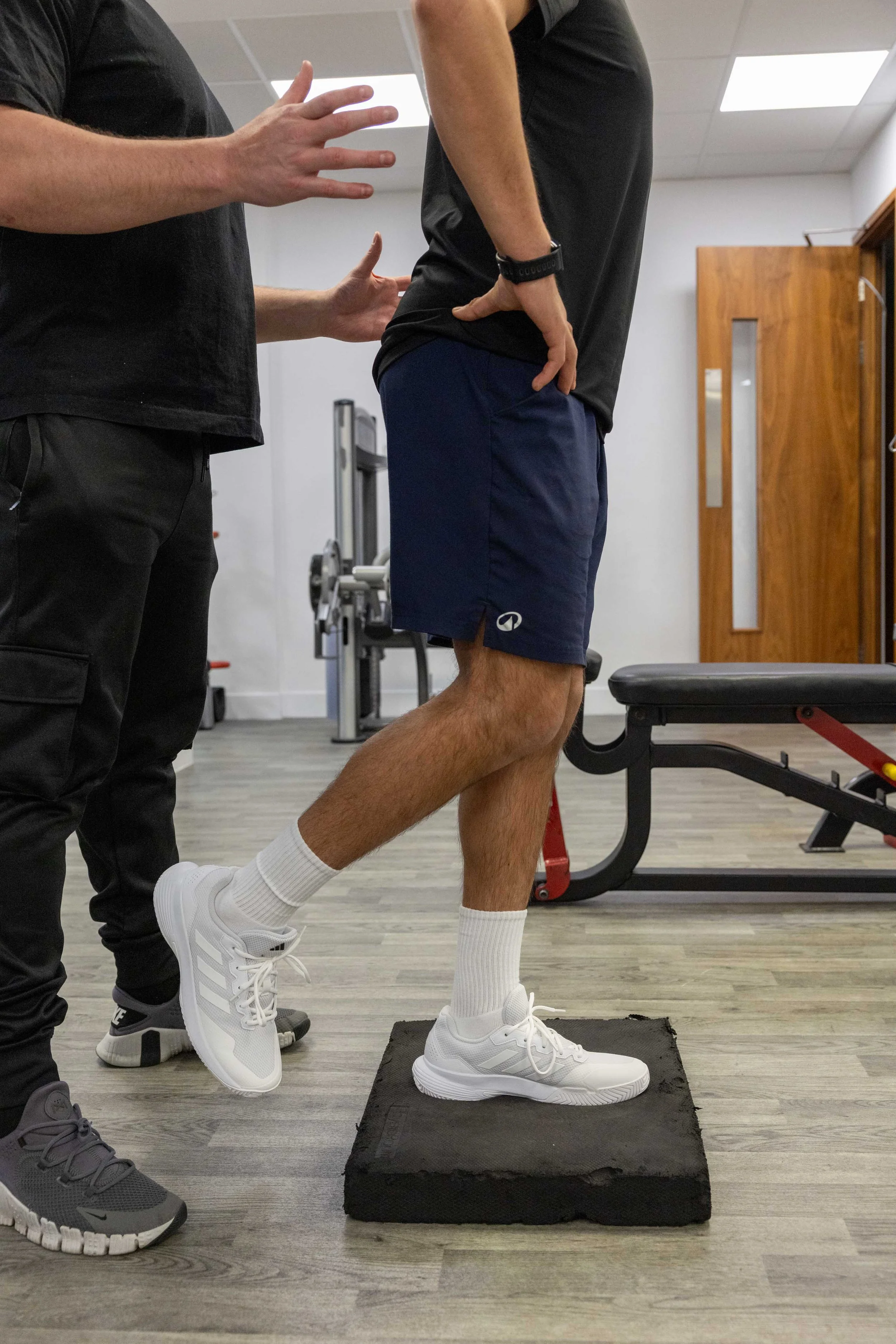
This is a crucial and usually overlooked part of endurance running. The stability of the lower limb is almost as important as cardiovascular endurance: if your body is not landing efficiently and safely, the likelihood of ankle sprains, trips, falls, Achilles tendon issues and muscle tears is significantly higher. You cannot control external factors, but you can control the stability of your landing.
Practice single-leg balance using these guidelines: barefoot on a hard surface, at least 120 seconds; running trainer on a hard surface, at least 150 seconds; barefoot on a soft surface, at least 90 seconds; running trainer on a soft surface, at least 120 seconds. Any hard flooring works for the hard surface; carpet, a yoga mat or a pillow for the soft. If that is all too easy, repeat the same times with your eyes closed - it sounds simple but makes the task far harder, and it forces the stabiliser muscles of the lower leg to work as hard as possible.
Enjoy the experience
This is the most crucial of all. Enjoy the roads of London closed down for your moment of sunshine. Embrace the crowds, the screaming, the high fives and the water stations. Think back to those bleak frosty mornings and dark freezing evenings of training - when you wanted to stay in bed but did not, when you wanted to go home but stayed out. Look around: you are surrounded by like-minded people trying to do something great. You have come a long way for this moment. Take it with both hands and enjoy it. The atmosphere of the London Marathon is like nothing else - soak it in and make it a day to remember for all the right reasons.
Preparing for a marathon? NRG Sports Therapy is a sports injury clinic in Bloomsbury, Central London. Book an injury assessment and we will build you a plan to get you to the start line at your best.